Origin Story
“You won’t understand anything about the imagination until you realise that it’s not about making things up, it’s about perception.”
“The active Imagination perceives and shows to itself an Earth which is other than that Earth which is seen in ordinary sensory experience.”
When we considered the day – the moment – to originate a new Contemplative Labs site, we wanted to select a place in time that had meaning.
The dawning realisation was to make that moment Earth Day. And to make the place – the location – a place of meaning.
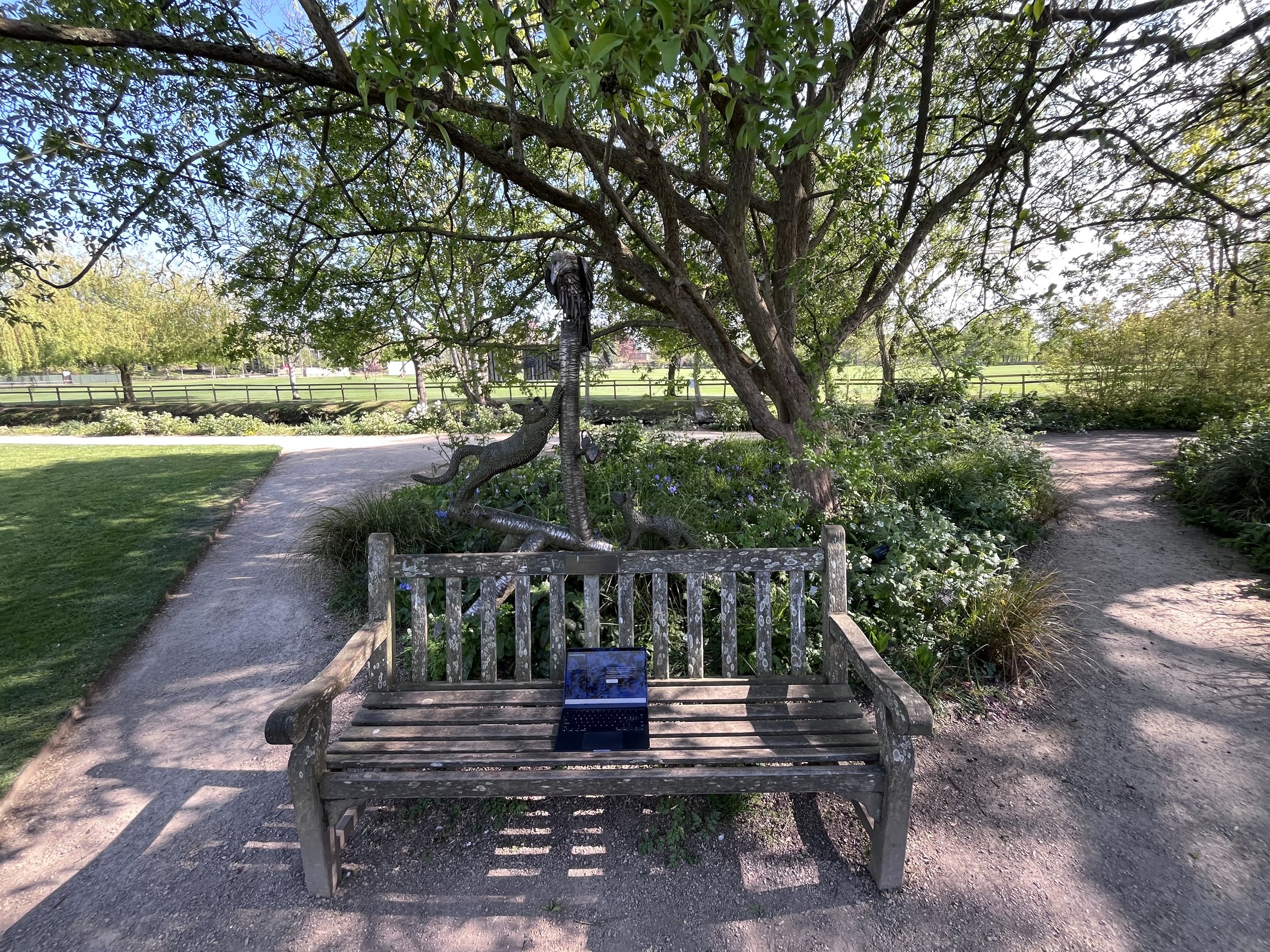
After a period of reflection, it became clear that the place was a bench in the Oxford Botanic Garden.
Contemplative Labs as an organization is deeply informed by insights from the great traditions.
We are also intent on exploring – on discovering – how the Old becomes New. How does timeless wisdom, or may we say, how does Sophia, the personification of this wisdom, speak now?
How does Sophia speak to us now?
Philip Pullman’s works are a rare contemporary articulation, addressing, and sacralizing of the imagination – of the imaginal world.
They spoke to me as a teenager and they speak to me now.
His visionary stories – or as Corbin might say – his visionary recitals, speak us into our better natures.
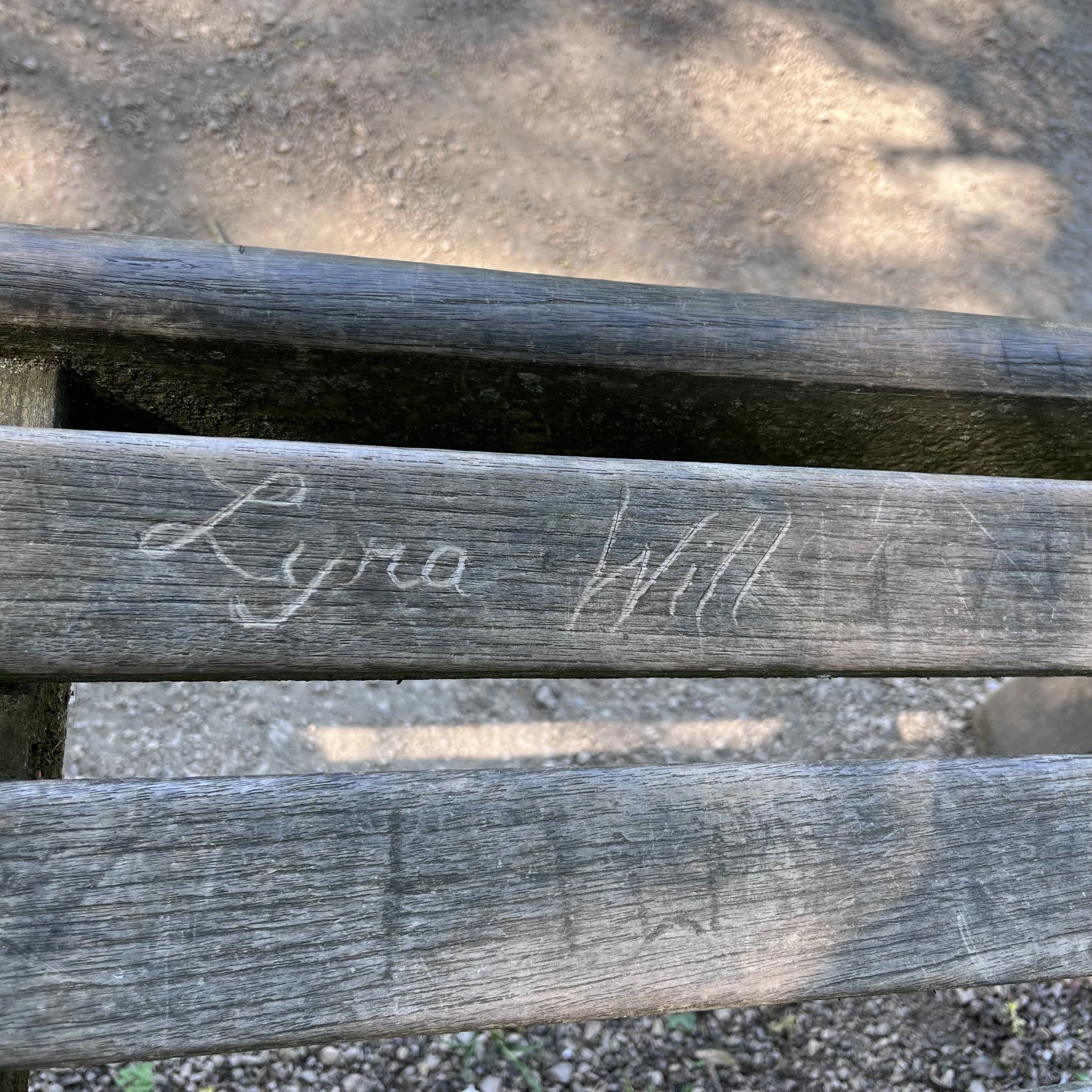
When I first visited the bench in the Oxford Botanic Garden – a place with great symbolic meaning in his stories – a place that unites universes – I sat and felt the presence of the imagination. The presence of the imaginations of those who sat there like me, fellow pilgrims of the imagination and the felt sense.
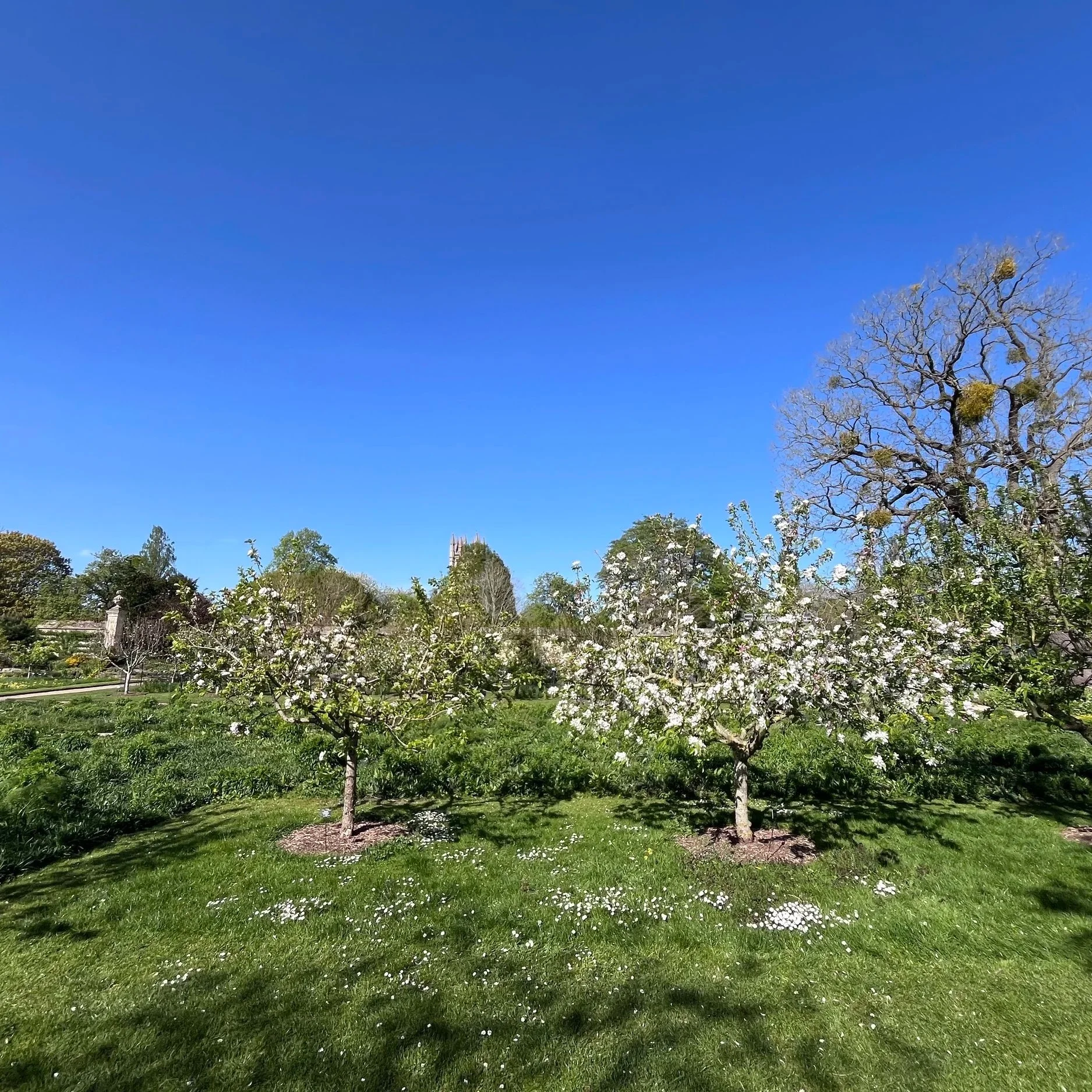
I was touched and hopeful. Here was a place, in a time that has forgotten the imagination, that hinted at the imagination being birthed anew. The Old becoming New. Outside tradition, and yet, sitting on that bench, with a close view of the spires of tradition. Magdalene College Chapel.
So it was, on Earth day, in the golden light, a few minutes before 4pm, that we pressed “PUBLISH.”
In this new space for Contemplative Labs, we hope to serve, to support, the capacity that each human being has to experience themselves in the light of the imaginal.
If the question were to be raised, “What is beyond possibility?” We might reply, “The light of the imaginal.”
What might happen when we see ourselves in that light? There are few as eloquent as Corbin, as lyric: “The Earth is then a vision, and geography a visionary geography.”
There is more to be said about the relationship between the Earth and the Imaginal Earth.
Our growing intuition and apperception is that we must know and take care of not just the Earth, but the Imaginal Earth. That the two are one. And that the Imaginal Earth offers a healing – a light – for both ourselves and our Earth.
Corbin calls this Imaginal Earth – this mundus imaginalis – by another name, “the Earth of Resurrection.”
May we begin anew.